

Key Takeaways
- The week after discharge carries the highest overdose risk because tolerance drops fast — one cohort of 81,519 inpatient detox discharges saw nearly 10% experience a later opioid overdose 4.
- Detox without medication for opioid use disorder is not recommended by the CDC; buprenorphine, methadone, or naltrexone are what reduce resumed use and overdose death 1.
- Linkage is the strongest safeguard — a filled prescription, a booked follow-up, and naloxone in hand outperform referral lists, with 78% engagement after ED-initiated buprenorphine versus 37% for referral alone 7.
- Fentanyl exposure changes induction timing more than it changes feasibility; precipitated withdrawal occurred in roughly 1% of fentanyl-using patients when buprenorphine was timed with the COWS scale 6.
What Happens in the First 72 Hours After You Leave
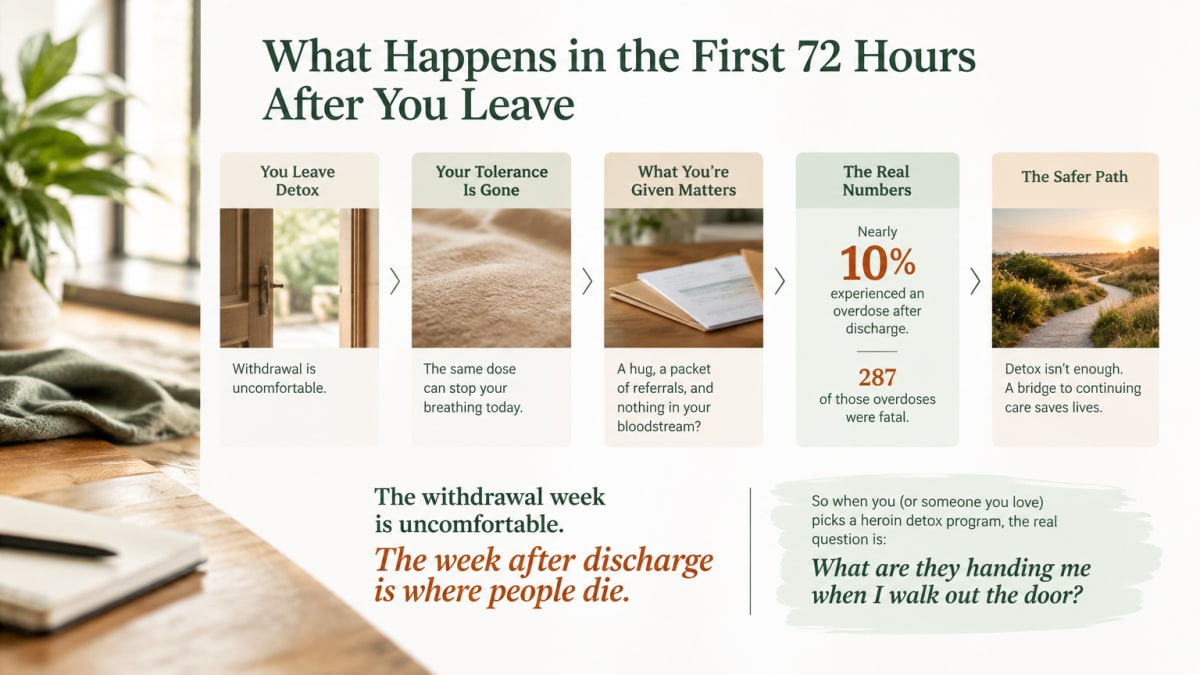
Here is the part most heroin detox programs underplay: the days right after discharge are the most dangerous of the whole process. Your body has lost its tolerance. The dose that felt normal last week can stop your breathing today. And if the program sent you home with a hug, a packet of referrals, and nothing in your bloodstream, the odds are not in your favor.
A retrospective cohort study of 81,519 inpatient detoxification discharges found that 7,624 of those patients went on to experience an opioid overdose afterward — nearly 10% — and 287 of those overdoses were fatal 4. That study tracked discharges across a real-world treatment system, not a hand-picked population, which is why it matters so much when you are comparing programs this week.
So when you (or someone you love) picks a heroin detox program, the question is not just “will they get me through withdrawal safely?” The real question is: what are they handing me when I walk out the door?
What a Medically Supervised Heroin Detox Actually Does
A medically supervised heroin detox is a short, clinical process designed to do two things at once: keep your body safe while opioids leave your system, and set up the medication and support you’ll need the moment withdrawal breaks. It is not rehab. It is not therapy. It is the opening move of opioid use disorder care, and the CDC is explicit that detoxification on its own, without medications for OUD, is not recommended because it raises the risk of resumed use, overdose, and overdose death 1.
Here is what that actually looks like on the ground. You arrive, usually in some stage of withdrawal or close to it. A clinician assesses how physically dependent you are, what else is in your system (alcohol, benzodiazepines, stimulants), whether you’re pregnant, and what psychiatric or medical conditions need attention at the same time. Vitals get checked around the clock. If you’re already sick — sweating, cramping, vomiting, unable to sleep — the medical team can treat those symptoms within hours, not days.
Then medication decisions start. Most heroin detox programs use buprenorphine or methadone to relieve withdrawal and cravings directly, with lofexidine or clonidine available as non-opioid options for people who can’t or won’t use an agonist 5. The FDA recognizes buprenorphine, methadone, and naltrexone as the three approved medications for opioid use disorder, and all three can shape what your care looks like during and after detox 2.
The stay itself is usually several days to about a week. But the real work of a strong program happens in parallel: coordinating the prescription you’ll leave with, booking your follow-up appointment, putting naloxone in your hand, and making sure someone knows when you’re coming home. Detox stabilizes you. Linkage keeps you alive.
The Medications That Make Withdrawal Survivable
Buprenorphine: Fast Relief, One Timing Catch
Buprenorphine is often the fastest way out of acute heroin withdrawal. It is a partial opioid agonist, which in plain English means it binds to the same receptors heroin uses but with a ceiling on its effects. Once it’s on board, the sweating, cramping, and bone-deep restlessness usually ease within an hour or two. The FDA lists it as one of three approved medications for opioid use disorder 2.
The catch is timing. If you take buprenorphine while there is still enough heroin or fentanyl on your receptors, it can shove those other opioids off and throw you into precipitated withdrawal — a sudden, intense version of what you were trying to escape. That is the fear a lot of people walk in with, and it is a real one. A good program handles it by waiting until you’re already in moderate withdrawal, using a validated symptom score (the COWS scale) to time your first dose 5.
Done right, induction takes a few hours and a lot of the misery falls away. You stay on a daily dose through the rest of your stay, and buprenorphine can be continued as part of ongoing OUD treatment after discharge.
Methadone: Steady Control Through an Opioid Treatment Program
Methadone is a full opioid agonist, which means it occupies the same receptors heroin does without a ceiling effect. For people with a long, heavy use history — or anyone who has struggled on buprenorphine — it can be the medication that finally makes withdrawal and craving quiet down. NIDA identifies methadone alongside buprenorphine as a medication that eases both withdrawal symptoms and the pull to use again 5.
Methadone for OUD is delivered through federally regulated opioid treatment programs (OTPs), and the handoff from a heroin detox to an OTP is one of the moments where linkage either happens or doesn’t. The 2024 revisions to 42 CFR Part 8 gave OTPs more room to use clinical judgment about take-home doses at the start of treatment and allow certain telehealth screening and initiation steps 3. That matters because it means your first week on methadone can look less like a daily lineup at a clinic and more like real medical care.
If your program is talking about methadone, ask who the receiving OTP is, when your first dose there is scheduled, and how you’ll get there.
Lofexidine and Clonidine: Non-Opioid Options for Symptom Relief
Not everyone wants to start an opioid medication, and not every patient is a candidate for one. Lofexidine and clonidine are non-opioid medications that work on a different system — they calm the overactive nervous system response that drives a lot of heroin withdrawal: the racing heart, the sweating, the chills, the agitation. NIDA notes that lofexidine specifically can reduce withdrawal symptoms during detoxification 5.
These medications do not touch cravings the way buprenorphine or methadone do, and they do not protect against overdose after discharge. What they can do is make the physical acute phase more bearable while you decide — with the clinical team — whether you’ll move to extended-release naltrexone after you’re fully detoxed, or whether an agonist medication still makes sense later. If a program offers only clonidine or lofexidine and calls it a complete heroin detox, that is a signal to ask what comes next.
Extended-Release Naltrexone: Only After You’re Fully Detoxed
Extended-release naltrexone is the third FDA-approved medication for opioid use disorder 2. It is not an opioid at all — it’s an antagonist, which means it blocks the receptors so heroin and other opioids can’t produce their usual effect. One injection lasts about a month. For people who want to be medication-protected without taking a daily opioid medication, it’s a meaningful option.
The hard part is getting to it. NIDA is clear that extended-release naltrexone is approved for use after detoxification, which means your body has to be fully opioid-free before the first injection 5. Starting it too soon causes severe precipitated withdrawal. A heroin detox program that plans for naltrexone should map out the opioid-free window, the first injection date, and who’s giving it to you before you walk out.
Fentanyl Changes the Math — But Not the Way You Might Think
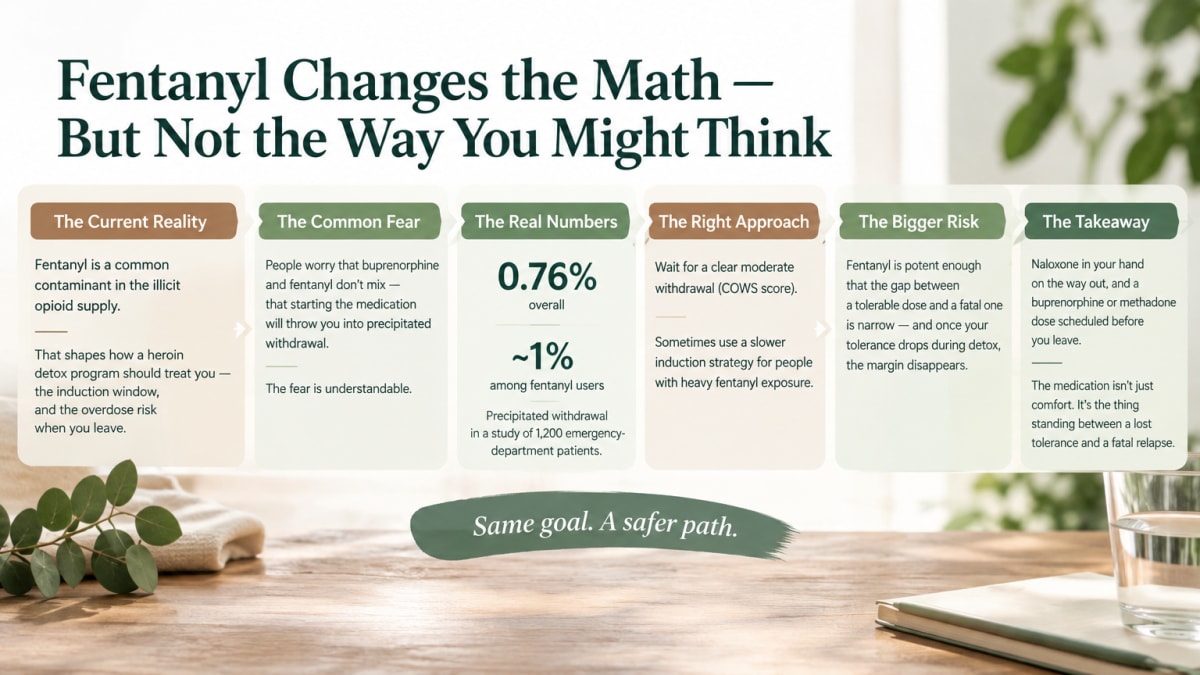
In recent years, fentanyl has become a common contaminant in the illicit opioid supply, and that reality shapes how a heroin detox program should treat you — the induction window, the overdose risk when you leave.
Here’s where the fear usually lands: a lot of people have heard that buprenorphine and fentanyl don’t mix, that starting the medication after fentanyl use will throw you into precipitated withdrawal — that sudden, violent version of the sickness you were trying to end. The fear is understandable. The numbers tell a calmer story. In a prospective multisite study of 1,200 emergency-department patients receiving buprenorphine initiation, precipitated withdrawal occurred in nine people — 0.76% overall, and roughly 1% among participants who had used fentanyl 6. That’s not zero. But it’s not the horror story the message boards suggest, either.
A program that knows what it’s doing will wait until your COWS score climbs into clear moderate withdrawal before the first dose, and sometimes use a slower induction strategy for people with heavy fentanyl exposure 5.
The bigger math problem is tolerance after discharge. Fentanyl is potent enough that the gap between a tolerable dose and a fatal one is narrow — and once your tolerance drops during detox, the margin disappears. That’s why naloxone in your hand on the way out, and a buprenorphine or methadone dose scheduled before you leave, matter. The medication isn’t just comfort. It’s the thing standing between a lost tolerance and a fatal relapse.
Why Detox Alone Isn’t Treatment — And What Linkage Looks Like
Think of detox as the first mile of a longer road. The CDC is explicit on this point: detoxification on its own, without medications for opioid use disorder, is not recommended, because stopping there raises the risk of resumed use, overdose, and overdose death 1. That isn’t a judgment call. It’s what the data keep showing, and it’s why the strongest heroin detox programs treat the week in the building as setup for what happens next.
What does “linkage” actually look like? It means you leave with a buprenorphine prescription already filled, or a methadone appointment at a specific opioid treatment program on a specific day. It means naloxone is in your bag, and someone showed you how to use it. It means a counselor has your number, a follow-up visit is on the calendar within days, and your family knows the plan if you don’t make it to that appointment. Linkage is the handoff — specific, booked, written down.
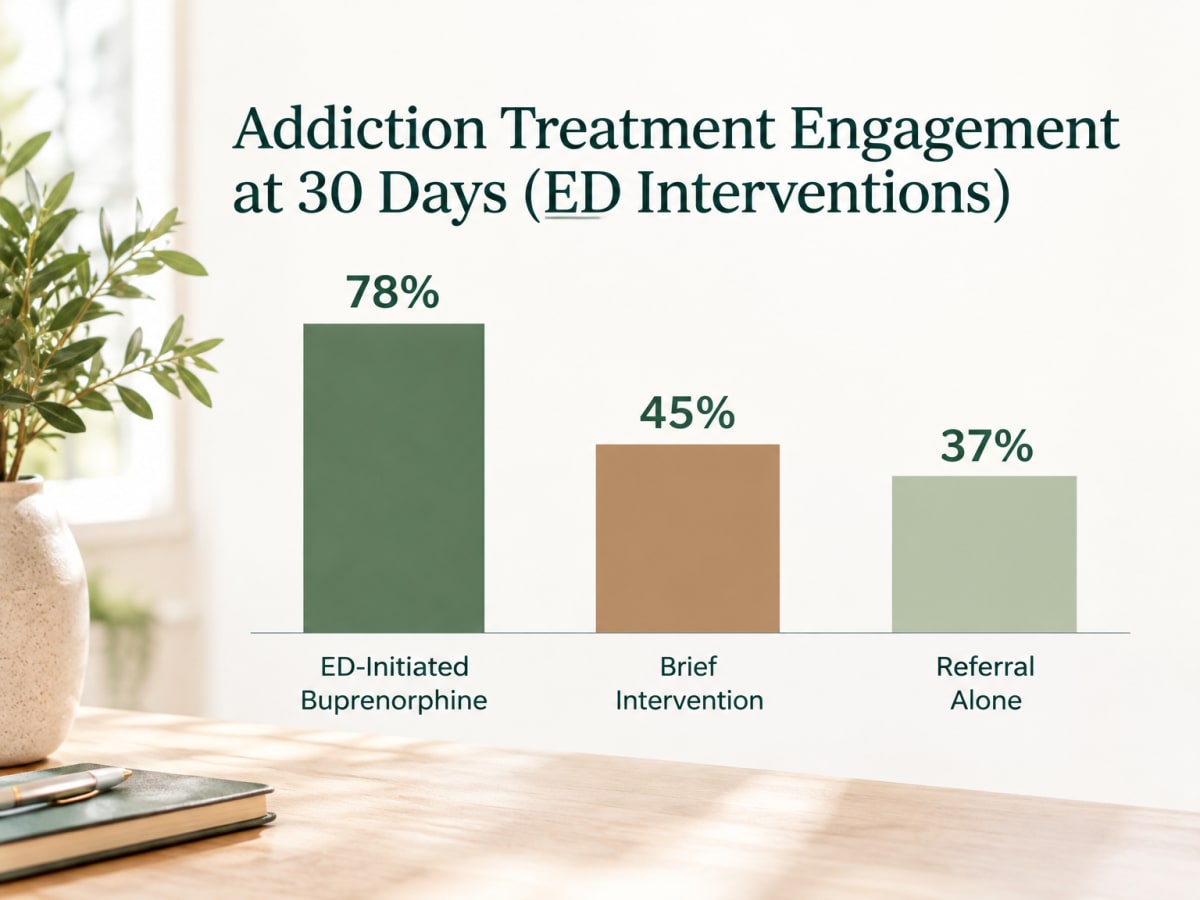
Here is why that handoff matters so much. A randomized clinical trial compared three paths after an opioid-related emergency department visit: starting buprenorphine right there with a follow-up arranged, a brief intervention and referral, or a referral alone. At 30 days, 78% of patients who received ED-initiated buprenorphine were engaged in addiction treatment, compared with 45% in the brief intervention group and 37% in the referral-only group 7. The study was done in urban emergency departments, not detox centers, but the lesson travels: a medication started and a next step booked beats a stack of phone numbers almost every time.
If a heroin detox program can only hand you a list of places to call, you are being set up for the referral-only outcome. Ask what the medication plan is, who your prescriber will be next week, and when the first appointment is. If those answers are vague, keep asking — or keep looking.
Questions to Ask a Program Before You Admit
What Medications Do You Start, and When?
This is the first question, not the fifth. You want a program that can tell you, in plain language, which medication they plan to start, how soon after admission, and who prescribes it after you leave. The FDA recognizes buprenorphine, methadone, and naltrexone as the three approved medications for opioid use disorder, and a serious heroin detox program will have a clear path to at least one of them 2.
Ask: “If I’m in withdrawal when I arrive, how long until I get my first dose?” Ask whether they use the COWS scale to time buprenorphine induction, and what they do differently if you’ve been using fentanyl. If they can only offer clonidine or lofexidine for symptom relief without a plan for an agonist or naltrexone afterward, you’re looking at comfort care, not opioid use disorder treatment 5.
What Does My Discharge Plan Include?
A real discharge plan is specific, written, and in motion before you leave the building. Vague answers here are the single biggest warning sign. You want names, dates, and prescriptions — not a stack of brochures.
Ask the program to walk you through exactly what you’ll leave with. A strong plan includes a buprenorphine prescription already sent to a pharmacy, or a methadone appointment at a named opioid treatment program on a specific day. The 2024 revisions to 42 CFR Part 8 gave OTPs more flexibility on take-home doses and telehealth at intake, so the first week on methadone can be arranged before you walk out instead of after 3. Ask whether naloxone is given to you and whether someone shows you and a family member how to use it. Ask who your follow-up prescriber is, when the first appointment is, and what the plan is if you miss it.
If the program hesitates on any of these, keep asking. The CDC is explicit that detoxification without ongoing medication for OUD is not recommended, which is why a discharge plan without a medication handoff is a half-finished job 1.
How Do You Handle Co-Occurring Conditions and Other Substances?
Heroin rarely shows up alone. A lot of people also use benzodiazepines, alcohol, stimulants, or kratom, and many are living with untreated depression, anxiety, PTSD, bipolar disorder, or ADHD underneath all of it. A program that only looks at the opioid part is going to miss what sends you back out.
Ask who does the psychiatric assessment and when. Ask how they manage a benzodiazepine or alcohol taper if that’s in the picture — both can cause life-threatening withdrawal and need their own medical protocol, not an afterthought. Ask whether a psychiatric prescriber can start or adjust medication during your stay, not just “recommend” something for later.
If you’re pregnant, ask specifically about obstetric coordination and the program’s experience with methadone or buprenorphine in pregnancy. If you’re on medications for another condition, ask who’s reviewing them. A heroin detox program that treats you as one diagnosis instead of a whole person will discharge you with the same gaps you walked in with.
Warning Signs a Program Is Detox-Only
Some heroin detox programs are quietly built to get you through the week and nothing more. The staff are kind, the beds are clean, the withdrawal gets managed — and then you walk out with a folder of phone numbers and a tolerance that no longer protects you. Here is how to spot that pattern before you admit.
- The intake conversation is vague about medication. If no one can tell you which medication they plan to start, when, or who prescribes it after discharge, the program is treating withdrawal as the finish line. The CDC is explicit that detoxification without ongoing medication for opioid use disorder is not recommended because it raises the risk of resumed use, overdose, and overdose death 1.
- Naloxone is not part of discharge. If you have to ask for it, or if the answer is “we can give you a prescription,” that is a program leaving overdose prevention to chance.
- Follow-up is a list, not an appointment. “Here are some places to call Monday” is the referral-only pathway, and the research on what happens next is not kind to it 7.
- The word “abstinence” shows up more than the word “medication.” Programs that frame buprenorphine or methadone as “replacing one drug with another” are working from an older playbook that the FDA, CDC, and NIDA have all moved past 2.
If two or more of these show up on your intake call, keep calling other programs.
Getting Admitted This Week: What to Expect
If you’ve decided this is the week, here’s what the next 24 to 48 hours usually look like. You call. Someone picks up — most reputable detox programs run intake lines around the clock. They’ll ask about your use (what, how much, when you last used), other substances, medical history, psychiatric history, insurance or payment, and whether you have someone who can bring you in. The call is clinical, not interrogative. You do not have to perform honesty tests. You just have to tell the truth so they can keep you safe.
Insurance verification often happens on that same call. If you’re uninsured, ask what their sliding scale or state-funded options are before you hang up — a program that can admit you today will usually know this answer in minutes. Have a photo ID, your insurance card if you have one, and a list of any medications you’re currently taking.
Bring comfortable clothes, slip-on shoes, and a phone charger. Leave anything valuable at home. Most programs restrict outside food, electronics beyond a basic phone, and anything that could be used as a weapon — not because they distrust you, but because the environment has to be safe for everyone in it.
Frequently Asked Questions
How long does heroin withdrawal last in a medically supervised detox?
Most detox stays run roughly a week while the acute physical symptoms are managed. Medication like buprenorphine or methadone shortens the misery significantly by treating withdrawal and craving directly instead of letting you ride it out 5.
Can I start buprenorphine if I’ve been using fentanyl?
Yes, and the fear around this is bigger than the actual risk. In a prospective study of 1,200 emergency-department patients, precipitated withdrawal happened in just 0.76% overall, and roughly 1% among people who had used fentanyl 6. The key is timing — a program that waits until you’re in clear moderate withdrawal before the first dose, using the COWS scale, keeps that risk low.
What’s the difference between detox and treatment for opioid use disorder?
Detox manages the physical withdrawal — a few days to a week of medical stabilization. Treatment for opioid use disorder is the longer work: ongoing medication (buprenorphine, methadone, or naltrexone), counseling, and relapse prevention that can last months or years. The CDC is explicit that detox without ongoing OUD medication is not recommended because it raises the risk of resumed use and overdose death 1.
Will I be judged or treated poorly for using heroin?
A good detox program is built around the opposite of judgment. Clinicians have seen every pattern of use, every amount, every combination. They are not there to grade you — they are there to keep you safe and start medication. If an intake call feels moralizing or shame-based, that is information about the program, not about you. Keep calling.
Can I get admitted to a detox program this week?
Usually yes. Most reputable heroin detox programs run intake lines 24/7 and can admit the same day or next day if a bed is available. The admission call covers your use history, other substances, insurance or payment, and transportation. If one program is full, ask them to refer you to another with openings — don’t wait on a single list.
What should I do if a loved one refuses to continue medication after detox?
Start by understanding why. A lot of refusal comes from older messaging that buprenorphine or methadone is “just another drug” — a framing the FDA, CDC, and NIDA have all moved past 2. Share what the research actually shows, keep naloxone in the house and know how to use it, and stay connected to their follow-up prescriber. You cannot force the decision, but you can make the safer path easier to say yes to.
References
- Opioid Use Disorder: Treating. https://www.cdc.gov/overdose-prevention/hcp/clinical-care/opioid-use-disorder-treating.html
- Information about Medications for Opioid Use Disorder (MOUD). https://www.fda.gov/drugs/food-and-drug-administration-overdose-prevention-framework/information-about-medications-opioid-use-disorder-moud
- 42 CFR Part 8 Final Rule: Frequently Asked Questions. https://www.samhsa.gov/substance-use/treatment/opioid-treatment-program/42-cfr-part-8/faqs
- Opioid overdose and inpatient care for substance use disorder following a medically managed withdrawal: A retrospective cohort study. https://pmc.ncbi.nlm.nih.gov/articles/PMC7928069/
- What are the treatments for heroin use disorder?. https://nida.nih.gov/publications/research-reports/heroin/what-are-treatments-heroin-use-disorder
- Buprenorphine initiation in the ER found safe and effective for individuals with opioid use disorder who use fentanyl. https://www.nih.gov/news-events/news-releases/buprenorphine-initiation-er-found-safe-effective-individuals-opioid-use-disorder-who-use-fentanyl
- Emergency department-initiated buprenorphine/naloxone treatment for opioid dependence: A randomized clinical trial. https://pubmed.ncbi.nlm.nih.gov/25919527/
- Emergency Department Access to Buprenorphine for Opioid Use Disorder. https://pubmed.ncbi.nlm.nih.gov/38285444/?dopt=Abstract

